
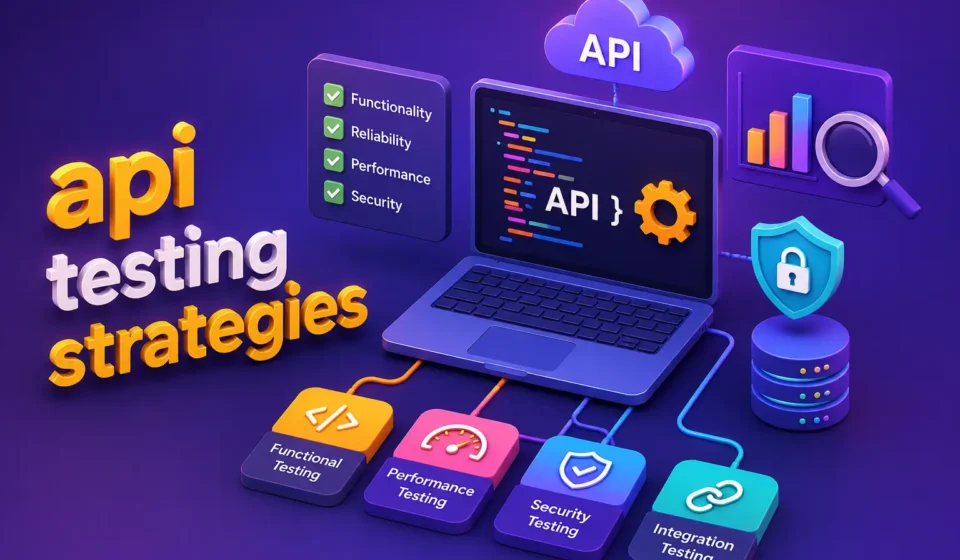
API Testing Strategies: Best Practices for Reliable APIs
Modern applications depend heavily on APIs to connect services, exchange data, and deliver seamless user experiences. Because APIs are the backbone of web and mobile applications, using effective api testing strategies is essential for ensuring reliable performance, strong security, and consistent functionality. Whether you are a beginner, QA engineer, or software developer, understanding the right testing approach can help you detect issues early, reduce development costs, and improve customer satisfaction. This guide explains practical strategies, real-world examples, and industry best practices that make API testing more effective. You will also discover when to use different testing methods and how they fit into the software development lifecycle.
Why API Testing Strategies Matter
Application Programming Interfaces (APIs) enable communication between different software systems. If an API fails, the entire application may experience problems such as broken features, incorrect data, or security vulnerabilities. That is why organizations invest in strong api testing strategies before releasing software to production.
Unlike user interface testing, API testing focuses directly on the business logic, requests, responses, authentication, and data validation. Since APIs can be tested without graphical interfaces, developers often identify bugs much earlier in the development cycle. Early detection reduces debugging time and lowers maintenance costs. Teams can also create related content such as an internal guide to API automation or an API security checklist, helping readers explore connected topics while strengthening internal website navigation. Read More : Best Coding Kata Sites: Improve Programming Skills Faster
Understanding Different Types of API Testing
Successful api testing strategies involve more than checking whether an endpoint returns a response. Each testing type focuses on a different aspect of API quality, helping teams discover hidden issues before deployment. Combining multiple testing methods creates a comprehensive quality assurance process that covers functionality, reliability, performance, and security.
Functional testing verifies whether every API endpoint performs exactly as expected. Test cases examine request parameters, response formats, status codes, and business logic. Validation testing ensures the API complies with design specifications, while integration testing confirms that connected services communicate correctly. Load and stress testing measure how the API performs under increasing traffic, helping organizations identify bottlenecks before real users encounter them. Exploring additional resources on performance optimization or microservices architecture can further support developers working with scalable systems.
Functional Testing as the Foundation
Functional testing serves as the starting point for nearly every API testing process. It checks whether each endpoint delivers the correct output based on valid and invalid inputs. Testers verify HTTP methods, response codes, headers, authentication, and returned data to ensure consistency across different scenarios.
For example, an online shopping application should return accurate product information when users search by category. If the API accidentally sends incomplete pricing details or incorrect inventory data, customers may lose trust in the platform. Comprehensive functional testing helps prevent these issues before the application reaches production.
Security-Focused API Testing Strategies
Security should never be treated as an optional step. Modern cyberattacks frequently target APIs because they expose valuable business data and customer information. Strong api testing strategies therefore include extensive security validation throughout the development lifecycle instead of waiting until final deployment.
Security testing evaluates authentication mechanisms, authorization controls, encryption, input validation, and vulnerability exposure. Testers intentionally attempt unauthorized access, SQL injection, cross-site scripting, broken authentication, and token manipulation to determine whether the API properly protects sensitive information. Creating supporting content about authentication methods or secure API development practices also helps users understand the broader security ecosystem
Authentication and Authorization Testing
Authentication verifies user identity, while authorization determines what that user can access after logging in. Testing both processes ensures unauthorized users cannot retrieve confidential information or perform restricted operations.
A banking API provides a simple example. Customers should only access their own account details, not another person’s financial records. Security testing confirms that authentication tokens, API keys, and user roles function correctly under normal and abnormal conditions, reducing the likelihood of privilege escalation attacks.
Performance and Load Testing for Scalability
One of the most valuable api testing strategies focuses on performance. Even perfectly functioning APIs become problematic if they cannot handle real-world traffic. Performance testing measures response times, resource consumption, and overall system efficiency under different operating conditions.
Load testing gradually increases the number of requests to identify the API’s normal operating capacity. Stress testing goes beyond expected traffic limits to determine how the system behaves during extreme demand. Spike testing simulates sudden traffic surges, while endurance testing evaluates long-term stability over extended periods. These insights help development teams optimize infrastructure before customers experience slow performance. Additional articles discussing cloud scalability or server optimization naturally complement this subject and strengthen topical authority.
Monitoring Response Time and Reliability
Fast response times improve both user satisfaction and application performance. Monitoring average latency, error rates, throughput, and server utilization provides valuable insights into API health over time.
Teams should establish performance benchmarks based on expected workloads and continuously compare actual performance against these standards. Integrating monitoring with automated testing enables quick detection of regressions after software updates, allowing engineers to resolve issues before they affect production users.
Automation in Modern API Testing Strategies
Automation has become a key component of effective api testing strategies, especially in Agile and DevOps environments where software changes frequently. Automated tests execute repetitive scenarios consistently, reducing manual effort while improving testing speed and coverage.
Automated API testing fits naturally into continuous integration and continuous deployment pipelines. Whenever developers commit new code, predefined test suites automatically validate functionality, security, and performance. Immediate feedback allows developers to fix issues quickly before they spread throughout the application. Readers interested in software delivery can also benefit from related guides covering CI/CD implementation or automated quality assurance workflows.
Choosing the Right Automation Approach
Successful automation begins by identifying stable, repeatable test scenarios with predictable outcomes. Authentication workflows, CRUD operations, regression testing, and data validation are excellent candidates for automation because they occur frequently throughout development.
Teams should also maintain reusable test data, organize scripts clearly, and regularly update automated tests whenever API functionality changes. Well-maintained automation suites remain accurate and provide long-term value instead of becoming difficult to maintain.
Best Practices for Building Effective API Testing Strategies
Developing reliable api testing strategies requires planning, consistency, and continuous improvement. Rather than treating testing as a one-time activity, successful organizations integrate it into every development phase. This proactive approach identifies problems earlier, reduces deployment risks, and supports continuous software improvement.
Following these practices creates a structured testing process that supports long-term software quality. Teams also benefit from documenting testing standards, sharing lessons learned, and encouraging collaboration between developers and testers. Over time, consistent processes lead to faster releases, improved reliability, and stronger customer confidence.
Common Mistakes to Avoid
Many organizations focus only on successful request scenarios while ignoring error handling, invalid inputs, and boundary conditions. This creates gaps that users eventually discover in production. Another common mistake involves testing only functionality without evaluating performance or security.
Incomplete documentation can also reduce testing effectiveness because future team members struggle to understand existing test cases. Maintaining clear documentation and regularly reviewing testing procedures helps ensure consistent quality as applications evolve.
Frequently Asked Questions
1. What are API testing strategies?
API testing strategies are structured approaches used to verify that APIs function correctly, remain secure, perform efficiently, and integrate successfully with other software systems throughout development.
2. Why is API testing important?
API testing helps identify bugs early, improves software reliability, strengthens security, reduces maintenance costs, and ensures applications continue working correctly after updates.
3. What is the difference between API testing and UI testing?
API testing validates backend communication, business logic, and data exchange without relying on a graphical interface, while UI testing focuses on user interactions within the application’s visual interface.
4. Can API testing be automated?
Yes. Many API tests can be automated, especially regression, functional, and integration tests. Automation speeds up development, improves consistency, and supports continuous integration workflows.
5. Which testing strategy should beginners start with?
Beginners should begin with functional API testing to verify requests and responses. After gaining experience, they can expand into security, performance, integration, and automated testing for more comprehensive coverage.
Conclusion
Effective api testing strategies play a critical role in delivering secure, reliable, and high-performing applications. By combining functional, security, performance, integration, and automated testing, development teams can identify issues earlier and release software with greater confidence. Continuous testing also supports faster development cycles while improving customer satisfaction and reducing long-term maintenance costs. As APIs continue powering modern digital services, investing in strong testing practices remains essential for building dependable software. For deeper learning, consider exploring related topics such as API automation, CI/CD testing workflows, and secure API development to strengthen your overall testing expertise.